

Learn to Read Nature’s Weak Signals
Notice change before silence becomes the last warning
Nature rarely changes all at once.
Before a forest becomes quiet, before a species disappears from a familiar place, before an ecosystem shifts visibly, there are usually smaller signs. A missing bird call. An unusual insect pattern. A plant blooming earlier than expected. A change in water clarity. A silence where there used to be movement.
These early signs are often easy to overlook because they do not look dramatic at first. They appear as small deviations from what people consider normal. But in strategic foresight, these are exactly the kinds of signals that matter.
At SignaNatura, we call them nature’s weak signals.
They are not final proof. They are not predictions. They are early indicators that something may be changing — and that we should pay attention before the change becomes irreversible.
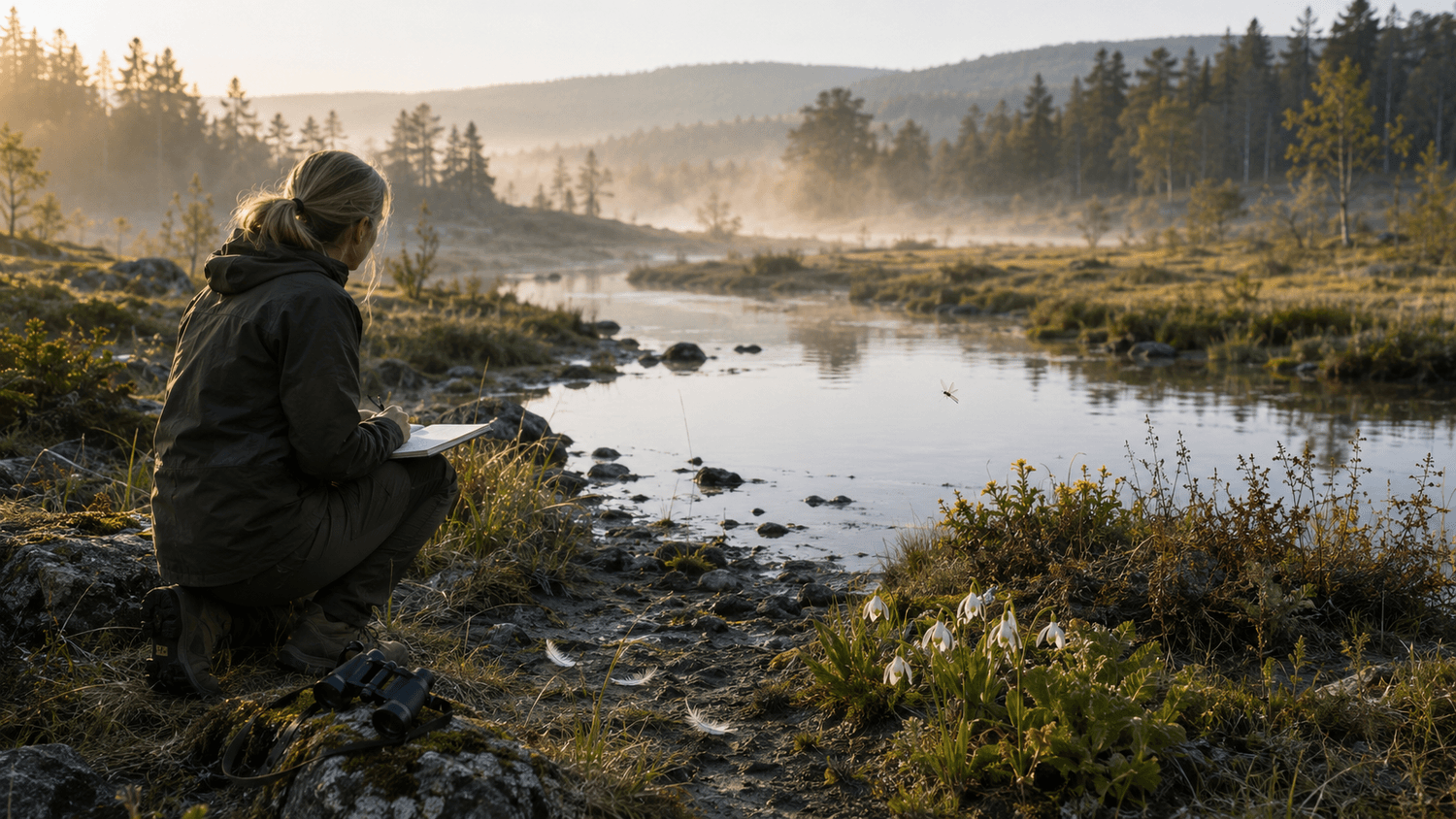
What are nature’s weak signals?
A weak signal is an early, incomplete or subtle sign of possible change.
In nature, weak signals can appear in many forms:
A species appears in an unusual location.
A familiar species becomes harder to find.
Birdsong becomes less frequent in an area where it used to be common.
Plants bloom earlier or later than expected.
Insects behave differently.
Water levels, soil conditions or seasonal rhythms begin to shift.
Local people notice that “something feels different,” even before official data confirms a trend.
Individually, these observations may seem small. One unusual sighting may not mean much. One quiet morning may not prove anything. One changed pattern may be coincidence.
But when many small observations begin to connect, they can reveal something larger.
That is where SignaNatura begins.
Why weak signals matter in environmental change
Environmental change is often recognized too late.
By the time damage is visible, the window for easy action may already be closing. Biodiversity loss, habitat stress, climate-related shifts and ecosystem disruption often develop gradually. The early phase is not always loud. It is scattered, local and difficult to interpret.
Traditional monitoring systems are essential, but they cannot capture everything. Scientific studies, satellite data and official measurements are powerful, but they may miss small human observations from everyday environments.
People who walk in forests, work near water, observe birds, photograph insects, manage land, fish, farm or simply pay attention to their local surroundings often notice changes early.
The problem is that these observations remain fragmented.
They stay in notebooks, social media posts, local conversations, photos, memories and isolated reports.
SignaNatura is built around one question:
What if these scattered observations could become shared signals?
Human observation is still irreplaceable
Technology alone cannot listen to nature.
Sensors, satellites and artificial intelligence can process large amounts of data, but they do not experience a place the way people do. A person who has walked the same path for twenty years may notice that something is missing long before the change appears in formal datasets.
Human observation provides context.
It understands rhythm, memory and local normality.
A local observer may notice:
“This spring feels different.”
“There used to be more butterflies here.”
“The lake smells unusual.”
“The forest is quieter than before.”
“These birds usually arrive earlier.
These statements may sound informal, but they can contain valuable early insight.
SignaNatura does not aim to replace human observation with AI. It aims to help human observations become more visible, structured and useful.
How AI helps us listen to nature’s silent signals
Artificial intelligence is useful because weak signals are difficult to detect manually at scale.
A single human can notice local changes. A community can notice more. But once observations begin to grow into hundreds or thousands of notes, photos, reports and environmental clues, patterns become harder to see without computational support.
AI can help by organizing and interpreting scattered observations.
It can identify recurring themes.
It can compare new observations with earlier patterns.
It can cluster similar signals from different locations.
It can detect anomalies.
It can connect observations to broader environmental, seasonal and ecological contexts.
It can help distinguish between isolated noise and emerging patterns.
This does not mean AI “knows” the truth. It means AI can help surface what deserves closer attention.
In SignaNatura, AI is not used as an oracle.
It is used as a signal amplifier.
From scattered observations to shared signals
The core idea behind SignaNatura is simple:
Observe nature. Detect change. Interpret signals.
First, people notice something.
Then, those observations are collected and structured.
Next, AI helps identify patterns, repetitions, anomalies and possible connections.
Finally, the findings are interpreted in a way that helps people, communities, researchers and decision-makers understand what may be emerging.
This process turns isolated observations into something more useful.
A single observation becomes a data point.
A group of similar observations becomes a pattern.
A pattern connected to context becomes a signal.
A signal interpreted over time becomes foresight.
That is the deeper purpose of SignaNatura: to help us see environmental change earlier, before silence becomes the last warning.
Why silence is an important signal
Silence is often misunderstood.
In nature, silence is not always peace. Sometimes silence is absence.
The missing sound of insects.
The missing movement of birds.
The missing frogs near water.
The missing seasonal rhythm.
The missing familiar species.
When people talk about environmental decline, the focus is often on visible damage. But absence can be just as important as presence. What is no longer there may tell us as much as what we can still see.
This is why the SignaNatura message matters:
Nature does not shout. It whispers.
If we ignore the whispers, the last message may be silence.
What makes SignaNatura different?
SignaNatura is not just another environmental awareness project.
It combines three elements that are usually separated:
Human observation.
Open environmental thinking.
AI-assisted weak signal detection.
This combination creates a practical bridge between local experience and strategic foresight.
Instead of waiting for environmental change to become obvious, SignaNatura asks people to pay attention earlier. Instead of treating small observations as random, it gives them structure. Instead of allowing signals to disappear into scattered channels, it creates a way to connect them.
The goal is not to create fear.
The goal is to create awareness, interpretation and timely action.
Who is SignaNatura for?
SignaNatura is for people and organizations that want to understand environmental change before it becomes obvious.
It is relevant for nature observers, citizen scientists, environmental initiatives, research organizations, municipalities, schools, landowners, infrastructure stakeholders and communities that care about the future of local ecosystems.
It is also relevant for people who may not see themselves as experts but who notice changes in the places they know.
You do not need to be a scientist to observe.
You need attention, curiosity and a willingness to report what you see.
Science becomes stronger when more people help notice what is happening.
The open-source idea behind SignaNatura
SignaNatura is built around the idea that environmental signals should not be locked away.
When nature changes, the knowledge should be shared, structured and made useful. Open-source thinking supports transparency, collaboration and trust. It allows tools, methods and frameworks to be improved by a wider community.
The purpose is to help build practical tools that turn scattered nature observations into shared signals.
This is not only a technology project.
It is a listening project.
A community project.
A foresight project.
A way to give nature’s early warnings a clearer voice.
Why this matters now
We live in a time when environmental change is accelerating, but public attention is fragmented.
People are surrounded by information, yet many early warnings remain unnoticed. Some signals are too small for headlines. Some are too local for global reports. Some are too early to be treated as evidence.
But early does not mean irrelevant.
In foresight, early signals are valuable because they create time.
Time to investigate.
Time to prepare.
Time to adapt.
Time to prevent damage.
Time to ask better questions.
The future does not arrive suddenly. It appears first as weak signals.
SignaNatura exists to help us notice them.
Final thought
Nature is already speaking.
Not loudly.
Not always clearly.
Not always in a way that fits traditional reports or dashboards.
But through patterns, absences, changes and small deviations, nature is sending signals.
The real question is whether we are ready to listen.
Learn to read nature’s weak signals. Notice change before silence becomes the last warning.

FAQ
What are nature’s weak signals?
Nature’s weak signals are early, subtle or incomplete signs that something may be changing in an ecosystem. They can include unusual species behavior, missing sounds, changes in seasonal timing, new patterns in plants or animals, or local observations that suggest environmental change.
How can AI help detect environmental change?
AI can help organize large amounts of nature observations, identify recurring patterns, detect anomalies and connect scattered signals. It does not replace human observation, but it can help make weak signals easier to notice and interpret.
Why are human observations important in nature monitoring?
People often notice local changes before they appear in official datasets. Long-term local experience helps identify what is normal and what feels unusual. Human observation provides context that technology alone may miss.
Is SignaNatura a scientific project?
SignaNatura supports environmental awareness, weak signal detection and AI-assisted interpretation. It can support researchers, communities and citizen observers by helping structure observations and reveal emerging patterns.
It means environmental change often begins quietly. The first signs may be small, subtle or easy to miss. If we ignore those early whispers, the final signal may be silence — the absence of species, sounds or ecological balance
Join the SignaNatura list and help us build a listening network for nature’s weak signals.