

The Future Belongs to Those Who Notice First
Not to those who predict but to those who perceive.
The world rarely changes overnight.
It shifts quietly, through small signals a new habit, a strange data point, an unexpected idea emerging at the edges.
Those who notice first aren’t fortune-tellers. They are simply more awake.
In every field, from technology to business to leadership, the advantage belongs to those who can sense movement before it becomes a wave. The ability to read weak signals to see before others has become one of the most valuable future skills of our time.
1. Weak Signals: The Whispers of Change
Most people wait for proof.
But by the time proof arrives, the opportunity is already gone.
Weak signals are the early hints of what’s next — small pieces of information that reveal new directions.
They can appear as a sudden consumer behavior, a shift in language, a prototype, or a regulation nobody pays attention to yet.
Spotting these requires three things:
Curiosity – asking “what does this mean?” instead of “is this relevant?”.
Pattern recognition – connecting isolated dots across industries.
Context awareness – understanding how small shifts can cascade into big change.
Foresight begins not with prediction, but with observation.
2. From Noise to Foresight
We live in a storm of data, trends, and opinions. The challenge isn’t a lack of information — it’s too much of it.
That’s why foresight is less about collecting and more about filtering.
Those who notice first develop a habit of sensemaking:
They scan widely, not narrowly.
They interpret signals in relation to systems.
They test their assumptions early.
This is what separates those who drown in information from those who see direction in it.
At SignaFutura, we call it Turning signals into sense.
3. The Foresight Mindset: Always in Beta
Noticing first is a mindset, not a moment.
It’s about staying in beta mode — continuously updating how you see the world.
Entrepreneurs, leaders, and innovators who thrive in uncertainty share three traits:
They explore the edges – spending time where new ideas emerge.
They connect across domains – seeing patterns others miss.
They act on early insight – moving while others are still debating.
Foresight is not about being right; it’s about being ready.
4. From Signals to Strategy
Every signal is a potential story about the future.
But insight only matters when it leads to action.
Ask yourself:
What weak signals am I noticing in my environment?
What might they mean for my work, my team, or my customers?
What could I do today to test that future instead of waiting for it?
Small experiments built on early signals become tomorrow’s competitive advantage.
If you want to train your ability to see before others, explore our 30-minute foresight practice:
Signal → So What → Now What.
10 Ways to Detect Signals in Everyday Life
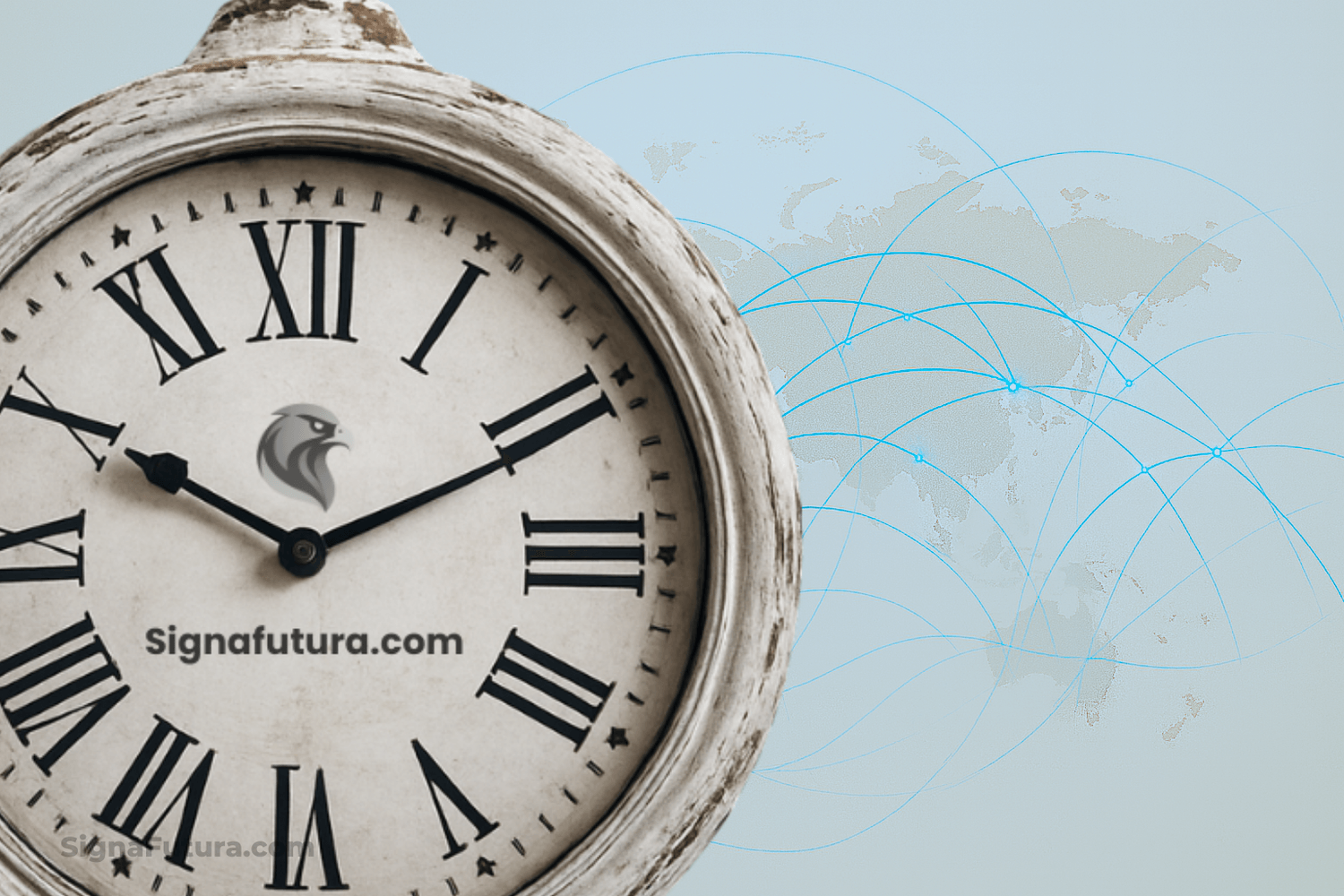
Recognizing signals is not rocket science – it is, above all, the ability to look at everyday life with fresh eyes. The biggest changes do not emerge in a vacuum; they creep in as small hints around us: in news headlines, coffee table conversations, store shelves, and social media streams. Often these signs go unnoticed because they do not yet fit our familiar picture of the world. Yet it is precisely from them that tomorrow’s trends and potential disruptions are born. When you learn to tune your “signal sense” to the everyday level, you become like a hunter who hears the first rustle before anyone else even suspects that movement has begun
Nature doesn’t shout it whispers.
AI helps us hear its warnings and signals of hope.
Practical Foresight in 30 Minutes
Hange doesn’t bring people or organizations down being caught off guard does. This course gives you practical tools to see early and act wisely: Signal → So What → Now What.
You’ll get immediately:
Concrete observation exercises (for everyday life and work)
Models for connecting signals to megatrends
A decision compass for fast, well-founded choices
Who it’s for:
Individuals who want to improve their decision-making
Entrepreneurs and freelancers (spot product, market, and content ideas before others)
Professionals and students (set direction for your career and skills)
Leaders and teams (a shared language for change)
Start today see new signals by tomorrow.
See What Others Don’t Yet Notice
Minna Canthin Katu 4, 70100 Kuopio, Finland
info@signafutura.com
Created with ©SJR Consulting